
Japan is home to two major religious traditions that have shaped its culture for centuries: Buddhism and Shinto. Though they coexist in Japan, these belief systems are fundamentally different. In this article, we will explore the differences between them in terms of history, practices, and architecture, as well as how these traditions are deeply embedded in everyday life and culture.
- The Historical Origins of Buddhism and Shinto
- Practices and Rituals: Differences in Worship
- Architecture: Temples vs. Shrines
- Buddhism and Shinto: Traditions Beyond Religion
- Conclusion: Coexistence of Buddhism and Shinto
The Historical Origins of Buddhism and Shinto
Buddhism: A Religion that Came from Abroad
Buddhism originated in India around the 5th century BCE and spread to China and the Korean Peninsula before arriving in Japan in the 6th century CE. It was introduced through the teachings of Siddhartha Gautama (Buddha), who sought to understand and end human suffering through enlightenment (nirvana). Buddhism focuses on the path to liberation from suffering and the cycle of rebirth.
Buddhism in Japan is not monolithic; it has evolved into various sects over time, with differences in practices and teachings. Notably, Zen Buddhism, which includes the Sōtō and Rinzai sectss, emphasizes meditation (zazen) as a central practice to achieve enlightenment. These practices are widely known for their focus on mindfulness and self-discipline.

Shinto: Japan’s Indigenous Faith
Shinto, on the other hand, is the indigenous religion of Japan, with no single founder or sacred text. Its roots go back to ancient times, with no fixed starting point. Shinto emphasizes the worship of kami (spirits or gods) found in nature, such as mountains, rivers, trees, and even human beings. The faith is deeply tied to Japanese culture and rituals and has no formal doctrine but instead focuses on practices, purification, and offerings.
Shinto is closely associated with Japan’s imperial family, as the Kojiki (Record of Ancient Matters) and Nihon Shoki (Chronicles of Japan) state that the Japanese emperor and the imperial family are considered to be direct descendants of the sun goddess Amaterasu, making them the living embodiment of kami.

Practices and Rituals: Differences in Worship
Buddhist Practices: Meditation, Offerings, and Rituals
Buddhism is centered around spiritual practices aimed at personal enlightenment. Common rituals include:
- Meditation (Zazen): A key practice in many Buddhist traditions, particularly in Zen Buddhism (e.g., Sōtō and Rinzai sects), where practitioners sit in silence to meditate, focusing on their breath and inner thoughts.
- Offerings: Buddhists make offerings of incense, fruit, and other items at temples to honor the Buddha and other spiritual beings.
- Funerals and Memorials: Buddhism plays a significant role in death rituals in Japan, where monks perform ceremonies for the deceased and their ancestors.
Shinto Practices: Purification, Offerings, and Festivals
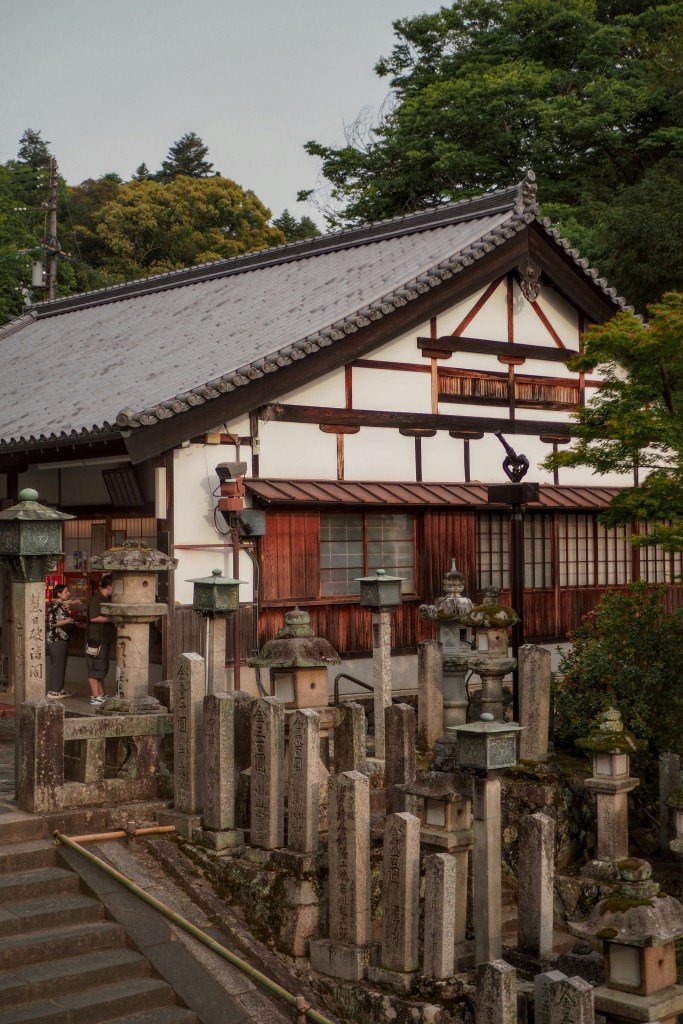
Shinto practices emphasize purity, respect for nature, and reverence for kami. Some key rituals include:
- Purification (Misogi): Before entering a shrine, visitors typically purify themselves by washing hands and rinsing their mouth with water.
- Offerings (Ema): Shinto practitioners offer symbolic gifts, such as rice, sake, or written prayers (ema) to the kami at shrines.
- Festivals (Matsuri): These are held throughout the year, celebrating various kami and nature, with processions, dances, and music.

Architecture: Temples vs. Shrines
Buddhist Temples
Buddhist temples in Japan are characterized by their elaborate, often serene architecture, designed to foster contemplation. Key features include:
- Pagodas: Multi-tiered towers often found in temple complexes, symbolizing the union of heaven and earth.
- Main Hall (Hondo): The focal point of Buddhist temples, where the main Buddha statue is housed. This is where worship and rituals are performed.
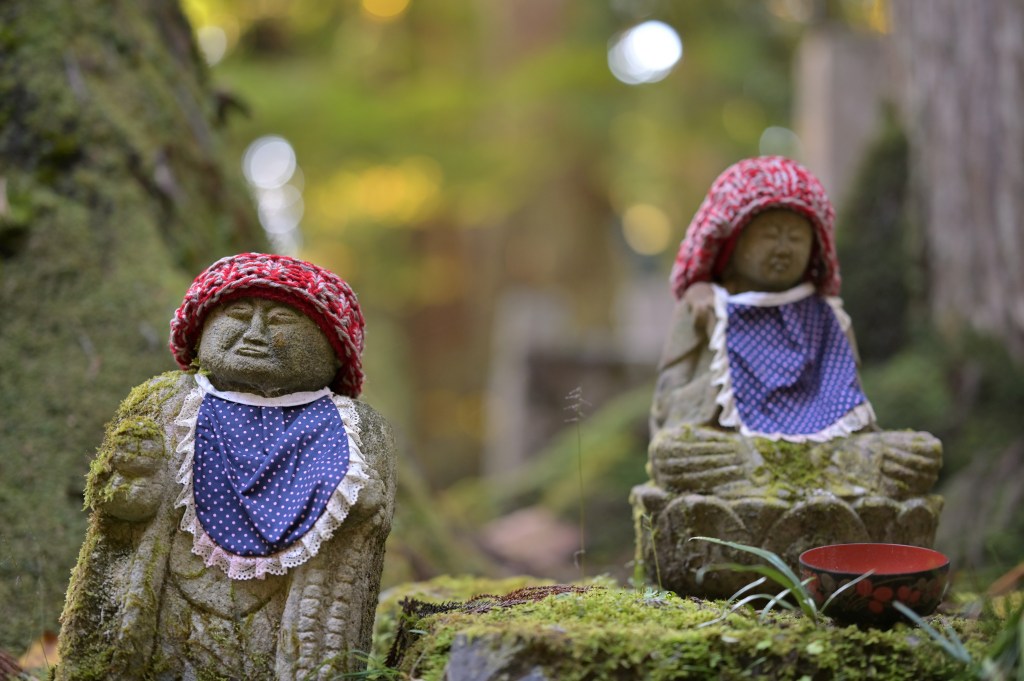
- Statues and Icons: Temples often feature statues of various Buddhas, Bodhisattvas, and other spiritual figures.
Shinto Shrines
Shinto shrines are designed to harmonize with nature and are often simple, wooden structures. Key features include:
- Torii Gate: The iconic gate that marks the entrance to a sacred space, symbolizing the transition from the mundane to the divine.
- Main Hall (Honden): The innermost part of the shrine, where the kami is enshrined. Only priests or shrine officials are allowed to enter this sacred space.
- Sacred Trees and Natural Elements: Shinto shrines are often built in serene natural surroundings, with trees, rivers, and other elements considered sacred.

Buddhism and Shinto: Traditions Beyond Religion
While many Japanese people may identify as “non-religious”, the practices of Buddhism and Shinto are still very much a part of everyday life. For most, these traditions are not about religious belief but about following customs that have been passed down for centuries.
- Festivals (Matsuri): These celebrations, often linked to Shinto, are a way for communities to come together and honor local kami (spirits), not necessarily to worship them in a religious sense but to continue traditions that connect people to their heritage.
- Life Events: Many Japanese people partake in both Shinto and Buddhist rituals—such as Shinto ceremonies for weddings and Buddhist rites for funerals—because these are seen as significant life events where tradition should be followed rather than acts of religious devotion.

Thus, for many, these practices are less about religious identity and more about cultural continuity, making them important elements of Japan’s unique tradition and lifestyle.
Conclusion: Coexistence of Buddhism and Shinto
Although Buddhism and Shinto have different origins, practices, and philosophies, they have coexisted in Japan for centuries. Many Japanese people practice both religions, visiting Shinto shrines for life’s celebrations and Buddhist temples for death and memorial services. This harmonious blend of belief systems reflects Japan’s openness to different traditions and its deep respect for both nature and the spiritual world.
 Japanese Method